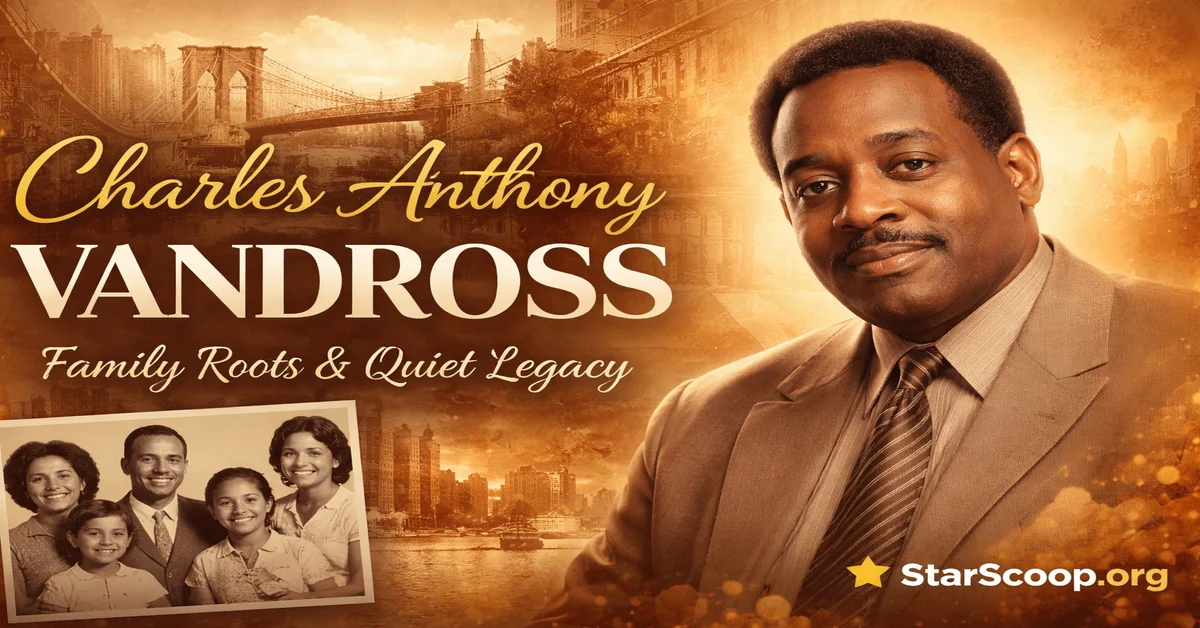
Charles Anthony Vandross is the elder brother of Luther Vandross, an American R&B and soul singer, songwriter, and record producer. Public family records and memorial listings place Charles Anthony Vandross within the Vandross family tree as one of Luther’s siblings, not his father. That detail matters, because online searches often mix up the names Luther Vandross Sr. and Charles Anthony Vandross. The clearest public record shows that Luther’s parents were Luther Vandross Sr. and Mary Ida Vandross, while Charles Anthony was part of that same family circle.
Why is Charles Anthony Vandross still searched today? Because people want the full story behind the Luther Vandross family tree. They want the deeper background behind the man whose music touched millions. When a family produces an artist like Luther, every name in that household becomes part of the story. Charles Anthony Vandross is one of those names: quiet, private, and meaningful in the larger picture of an iconic American music legacy.
Profile Summary
| Full Name | Charles Anthony Vandross |
| Famous Sibling | Luther Vandross |
| Parents | Luther Vandross Sr. (father), Mary Ida Vandross |
| Birth Year | 1947 |
| Death Year | 1991 |
| Nationality | American |
| Ethnicity | African-American |
| Birthplace Context | New York City |
| Cultural Influence | Exposure to R&B, Soul music, and Gospel music |
Early Life
The public record on Charles Anthony Vandross is limited, which is common for family members who never lived in the spotlight. Still, available memorial and genealogy sources indicate that he was born in 1947 and died in 1991. Those same sources place him in the same New York family that raised Luther Vandross. In other words, the Charles Anthony Vandross biography is less about celebrity and more about family history, memory, and the private foundations of a famous household.
Charles Anthony Vandross grew up in a home shaped by modest means and strong family identity. The Vandross family roots trace back to South Carolina before the family’s New York life became central to the children’s upbringing. Public biographical sources for Luther show the family living in Manhattan and later the Bronx, and that same household included Charles Anthony as one of the older siblings. This is why the phrase Charles Anthony Vandross family background connects naturally to a broader migration-and-family narrative.
The Vandross family story reflects a common American pattern of the era: Black families building stable lives in northern cities while carrying culture, discipline, and faith with them. That reality shaped the environment in which Charles Anthony Vandross lived. Even though there is little public reporting on his personal ambitions, the family setting itself was important. It placed him inside a home where effort mattered, music mattered, and the future of the children mattered.
Charles Anthony Vandross Family Life
Charles Anthony Vandross belonged to a family led by Mary Ida Vandross and Luther Vandross Sr. Public records identify him among the siblings listed alongside Patricia, Ann, and Luther. That means the Charles Anthony Vandross children and sibling relationships are part of the broader Vandross family structure, even if his own private life stayed mostly out of public view. In family history terms, he is important not because of fame, but because he is one of the people who helped shape the home around Luther Vandross.
To be precise, Charles Anthony Vandross was not the husband of Mary Ida Vandross. That role belonged to Luther Vandross Sr., the family patriarch. This is one reason the keyword phrase Mary Ida Vandross husband often creates confusion online. The family record points clearly to Luther Vandross Sr. as Mary Ida’s husband and to Charles Anthony as their child. Getting that right matters for both trust and accuracy.
The household values were shaped by care, faith, and perseverance. Mary Ida worked as a nurse, and Luther Vandross Sr. was an upholsterer and singer. That combination of practical work and musical expression created a home where responsibility and creativity could coexist. It is easy to see why people studying the Luther Vandross parents and the family’s home life keep returning to this story.
The Vandross children were raised in a lively and loving household. Luther was the youngest, and his older siblings included Patricia, Ann, and Anthony. Searchers often use Luther Vandross family tree and Luther Vandross childhood story because the family’s emotional bond shows up again and again in Luther’s music and public reflections. Charles Anthony’s place in that sibling group is part of what makes his name continue to matter.
The Vandross Household in New York City
The Vandross home in New York City was more than a residence; it was a creative starting point. Luther was born in Manhattan in 1951, raised on the Lower East Side, and later lived in the Bronx after the family moved. Britannica describes this environment as one where Luther’s widowed mother encouraged his love of music, and that encouragement came from the same household Charles Anthony shared. This is why Charles Anthony Vandross New York is really part of a larger city-and-family story.
Mid-century New York was full of energy, pressure, and possibility. For working-class families, the city could be demanding, but it also offered culture, music, and upward movement. The Vandross family lived in public housing on Manhattan’s Lower East Side, one of the places where ordinary families built extraordinary futures. That setting helped shape the emotional texture of the household Charles Anthony knew.
The cultural backdrop mattered just as much as the street address. New York in that period was a rich home for gospel music, soul music, and the emerging sound of modern R&B. Churches, neighborhoods, radio, and performance venues formed a musical atmosphere that reached deeply into family life. For the Vandross children, that meant growing up in a city where music was not just entertainment; it was part of identity.
Fatherhood and Influence on Luther Vandross
Charles Anthony Vandross’s biggest public significance comes through his relationship to Luther Vandross. Even though the family records identify Charles as a sibling, not a father, his place in the home still mattered. Siblings help shape a child’s emotional world. They influence habits, confidence, and the way music and conversation flow inside the home. That is why the phrase parental influence on musicians sometimes expands into a broader family influence on musicians.
Luther Vandross grew up in a house where music and memory were already present before his own fame began. Britannica notes that his mother encouraged him musically, and that his father died when Luther was eight. The older siblings, including Charles Anthony, were part of the world Luther lived in every day. In that sense, Luther Vandross father details are important, but the sibling environment is equally meaningful to understanding his childhood.
Luther’s later artistry is often linked to the sounds and feelings of his early home life. The family’s presence in New York, the rhythm of a working household, and the emotional strength of his mother all fed into the emotional depth that later defined his ballads. That is part of the reason people connect the upbringing of Luther Vandross with the broader story of his family. Charles Anthony Vandross belongs in that story because family atmosphere shapes musical imagination.
The emotional impact of family on an artist can be powerful even when it is quiet. Luther Vandross became known for love songs, longing, and tenderness, and those qualities often reflect a childhood rooted in both affection and loss. When people search for emotional influence in songwriting, Luther’s catalog becomes a clear example of how personal history can become art. Charles Anthony’s place in the family adds another layer to that emotional map.
Tragic Death and Its Impact on the Family
Public family records show Charles Anthony Vandross died in 1991. Because he was private, there is little widely published detail about the circumstances of his death. Still, every family loss leaves a mark, and the Vandross family already knew what grief felt like. Luther Vandross Sr. died in 1959, long before Luther became famous, and that earlier loss became part of the emotional landscape of the household.
The Charles Anthony Vandross death entry in public genealogical and memorial records is brief, which is typical for private family members. There is no major public obituary trail or celebrity coverage attached to his name. That silence should not be mistaken for lack of importance. Many families have members whose significance is felt deeply at home even when the outside world never fully notices.
Mary Ida Vandross had already endured immense loss by the time later family grief arrived. She was widowed young, and she became the steady center of her children’s lives. Her strength matters to any discussion of single-parent household after loss, because she kept the family grounded. For the children, including Charles Anthony and Luther, that resilience became part of the family’s emotional inheritance.
Luther’s childhood was shaped by the death of his father when he was eight. Britannica notes that he later dedicated “Dance with My Father” to that memory. That song became one of the clearest examples of how childhood trauma and success stories can coexist in the life of a great artist. Charles Anthony Vandross was part of the family circle surrounding that history, even though the song itself was about Luther’s father.
Life After His Passing
After loss, families either fragment or adapt. The Vandross family adapted through Mary Ida’s strength and the bonds among the siblings. That resilience is one reason the Charles Anthony Vandross life story still attracts interest. People are often drawn to lives that were not loud but were still deeply connected to a larger legacy.
The family’s adaptation was rooted in movement, discipline, and care. Luther eventually moved forward into education and music, while his household memories stayed with him. That kind of recovery is central to many inspirational music stories: the person rises, but the family remains part of the rise. In that sense, Charles Anthony’s place in the family is part of the story of endurance itself.
Mary Ida Vandross became the steady hand in the family after her husband’s death. Britannica describes her as the one who encouraged Luther’s music. That kind of guidance is one reason the family story still resonates. It shows how a parent’s strength can echo across decades, shaping not only children’s lives but also the art they later create.
Legacy of Charles Anthony Vandross
The legacy of Charles Anthony Vandross is indirect but real. He did not become a celebrity, and he did not build a public career that made headlines. But he was part of the family structure that surrounded Luther Vandross, one of the defining voices in modern Soul music and R&B. That makes Charles Anthony a meaningful name in the background of American music history.
Family influence does not always show up in credits or interviews. Sometimes it shows up in memory, in emotional range, and in the confidence a child carries into adulthood. Luther’s music was rich with feeling, and that feeling came from a life shaped by family, loss, and love. Charles Anthony Vandross was part of that environment, and so his place in the story deserves recognition.
The Vandross family belongs to the broader history of Black American creativity. Their story touches gospel music roots, New York migration, working-class stability, and the rise of a once-in-a-generation vocalist. When people study the family legacy behind Luther Vandross, they are really studying how homes create artists. Charles Anthony’s name belongs in that study.
Connection to Luther Vandross’ Success Story
Luther Vandross became a towering artist because he had rare talent, but also because his early life gave him depth. Britannica notes that he began his professional career with commercial jingles, background vocals, and songwriting before becoming a solo star. His path from New York housing projects to international acclaim is one of the great R&B music legend background stories, and family remained part of that emotional engine.
His early life shaped how he sang, what he wrote about, and how he connected to listeners. He was raised in New York, surrounded by family influence and by the sounds of the city. That setting helped him become an artist who could turn personal feeling into universal emotion. Charles Anthony Vandross, as part of that household, sits quietly inside the foundation of that rise.
Even though Charles Anthony was not Luther’s father, the phrase “father’s silent role in greatness” captures a deeper truth about family history: the men and women around a child shape the child’s future, whether through direct guidance or through the shared memory of the home. Luther’s actual father, Luther Vandross Sr., died early, and that loss became central to Luther’s song “Dance with My Father.” Charles Anthony’s role was quieter, but still part of the full family picture.
Cultural and Historical Significance
The story of Charles Anthony Vandross is also a story about mid-century Black family life in America. It reflects the strength of households that were building futures in New York while carrying faith, music, and ambition. That makes the name relevant far beyond a simple search term. It belongs to a larger conversation about identity, family, and cultural memory.
In the middle of the 20th century, New York City was home to thousands of families like the Vandrosses. They lived through work, neighborhood ties, church life, and changing opportunities. This is why the phrase 1950s family life in New York fits the Vandross story so well. It was a time when family discipline and cultural pride could quietly prepare the ground for greatness.
Family stories matter because they humanize fame. They remind readers that a legend like Luther Vandross did not appear out of nowhere. He came from a real home, with real parents and siblings, and Charles Anthony Vandross was part of that home. That is why the biography of music legends’ families continues to attract attention: it reveals the hidden architecture beneath public success.
Frequently Asked Questions (FAQs)
What was his relationship to Luther Vandross?
He was Luther Vandross’s brother, not his father. The father of Luther Vandross was Luther Vandross Sr. This is the key correction behind many search queries.
When did Charles Anthony Vandross die?
Public memorial and genealogy records place his death in 1991. Those same records place his birth in 1947.
How did his death affect Luther Vandross?
There is no widely published public account that directly describes Charles Anthony’s death as a turning point in Luther’s career. What is clear is that Luther’s own formative grief centered on the early death of his father, and that family loss became part of his emotional world as an artist.
What is his legacy today?
His legacy is tied to the Vandross family story. He remains part of the family background behind Luther Vandross, one of the most respected voices in R&B and soul music. That quiet connection keeps his name meaningful.
Summary
Charles Anthony Vandross may not have lived in the spotlight, but his name still matters. He belongs to a family whose story helped shape one of the most beloved singers in American music. His place in the Vandross family tree adds depth to the larger portrait of Luther Vandross parents, siblings, and New York roots.
In the end, the Charles Anthony Vandross history is a reminder that greatness often grows from quiet homes, strong mothers, hardworking fathers, and siblings who share the same foundation. His story is not loud, but it is valuable. It belongs to the long, inspiring line of families that helped build the emotional power of R&B, Soul music, and modern American music history.
You May Also Like: